Civics/Government
Help your child to become an active citizen by incorporating civics education into your homeschooling plan. Learn about the federal and Idaho government, how to contact your legislators, how government works, and more.
Activities & Experiments
How to Create a Midde School/High School Political Science Club
Tips for creating a political science club.
TeenPact Leadership Schools
TeenPact is a dynamic, hands-on leadership school for Christian students. Their mission is to train youth to understand the political process, value their liberty, defend their Christian faith and engage the culture at a time in their lives when, typically, they do not care about such things. The core program consists of the State Classes offered around the country.
H.E.A.R.T.S. - Homeschoolers: Educating, Assisting, & Reaching-out Through Service
H.E.A.R.T.S.' goal is to join together a diverse and inclusive group of homeschoolers in community service projects – to increase public awareness, understanding, and acceptance of homeschoolers and homeschooling through combined service, outreach, and public relations efforts.
Teaching Tips & Ideas
H.E.A.R.T.S. - Homeschoolers: Educating, Assisting, & Reaching-out Through Service
H.E.A.R.T.S.' goal is to join together a diverse and inclusive group of homeschoolers in community service projects – to increase public awareness, understanding, and acceptance of homeschoolers and homeschooling through combined service, outreach, and public relations efforts.
TeenPact
TeenPact is a comprehensive leadership experience that challenges students to grow both personally and spiritually. During TeenPact, students meet and interact with other Christian young people and leaders from across their state. The first step in the TeenPact Leadership School is the State Capitol Four-Day Class for ages 13-18. Here students learn about the political process and the basics of state government. The students then move onto a behind the scenes look at how their state government works. Workshops focus on the political process, parliamentary procedure, public speaking, and the bill-to-law legislative process.
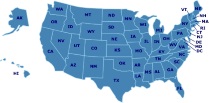
Looking for Another State?
Featured Resources
As an Amazon Associate, we earn from qualifying purchases. We get commissions for purchases made through links on this site.

Dr. Montessori's Own Handbook
A short, illustrated guide to the use of Montessori classroom materials. Describes how to set up a "children's house" - an environment for learning where children can be their own masters.

Help for the Harried Homeschooler : A Practical Guide to Balancing Your Child's Education with the Rest of Your Life
Homeschooling moms and dads can be overwhelmed by the demands on their time. Between their children’s educational needs; their roles as spouse, parent, and more; and their own individual desires and goals, these mothers and fathers struggle to accomplish all that must be done. In Help for the Harried Homeschooler, experienced homeschooler, author, and mother of four Christine Field offers sound advice for parents who want not only to achieve homeschooling success but also to reach a balanc...

Unclutter Your Home: 7 Simple Steps, 700 Tips & Ideas (Simplicity Series)
Hundreds of practical ideas for sorting, evaluating, and getting rid of all those material items that get in the way of a simplified lifestyle.

Guiding Your Catholic Preschooler
There can be no greater delight in parenting than passing on the Faith to the next generation. To help with that glorious responsibility comes Guiding Your Catholic Preschooler, a parents handbook to home-based religious instruction for the youngest members of the family. Filled with practical ideas, developmental guidelines, and a contagious enthusiasm for the treasures of the Catholic Faith, this exciting guide makes raising truly Catholic kids one of life s greatest pleasures. Recommended in ...

Kingdom of Children : Culture and Controversy in the Homeschooling Movement (Princeton Studies in Cultural Sociology)
More than one million American children are schooled by their parents. As their ranks grow, home schoolers are making headlines by winning national spelling bees and excelling at elite universities. The few studies conducted suggest that homeschooled children are academically successful and remarkably well socialized. Yet we still know little about this alternative to one of society's most fundamental institutions. Beyond a vague notion of children reading around the kitchen table, we don't know...